Our day
A predictable rhythm, not a rigid timetable
Sample daily routine
| Time | What's happening | Detail |
|---|---|---|
| 7.30 – 8.45am | Arrivals, quiet play and breakfast | Cereal, porridge, toast and fruit. A calm handover with your child's key worker. |
| 8.45 – 9.00am | Room settle and greeting | Songs, names, weather and the plan for the day in each room. |
| 9.00 – 11.00am | Work cycle and free play | Montessori work cycle in the ECCE room; child-led play, art and construction elsewhere. |
| 10.15am | Morning snack | Fruit, brown bread, cheese, milk or water. |
| 11.00 – 12.00pm | Outdoors | Garden, mud kitchen, bikes, digging beds and the willow tunnel. Rain gear on. |
| 12.00 – 12.45pm | Hot lunch | One hot main meal, cooked on site, served family style. |
| 12.45 – 2.30pm | Sleep, rest and quiet play | Cots and mats for those who sleep; stories, puzzles and yoga for those who don't. |
| 2.00 – 3.00pm | ECCE collection and after-school arrivals | School runs begin; ECCE children go home or join lunch club and the full day. |
| 3.00 – 3.30pm | Afternoon snack | Homemade scones, yogurt, fruit, milk or water. Hot snack for the after-school club. |
| 3.30 – 5.00pm | Outdoors and focus activities | Homework club, gardening, cookery, messy play and group games. |
| 5.00 – 6.15pm | Wind-down and collection | Books, small-group play and a face-to-face handover with every parent. |
Meals and snacks
Children in full day care are offered at least two meals and two snacks including one hot meal, in line with the Department's nutrition standards for early learning and care services. Everything is cooked on site by Bernie, our chef, and served family style so children pour their own water and serve themselves where they can.
Meals and snacks are included in the fee. Nothing is bought in, there are no deep-fried foods, and water and milk are the only drinks served.
Allergies and dietary needs
We ask for written details of every allergy, intolerance and dietary requirement at enrolment, backed by medical information where relevant. Allergen information for each dish is displayed daily in the entrance hall. Children with allergies have a named place setting and their own plate colour, and their care plan is on the kitchen wall and in the room. We are a nut-free setting. Halal, vegetarian and vegan meals are cooked to the same standard as everything else, not substituted with a plain plate.
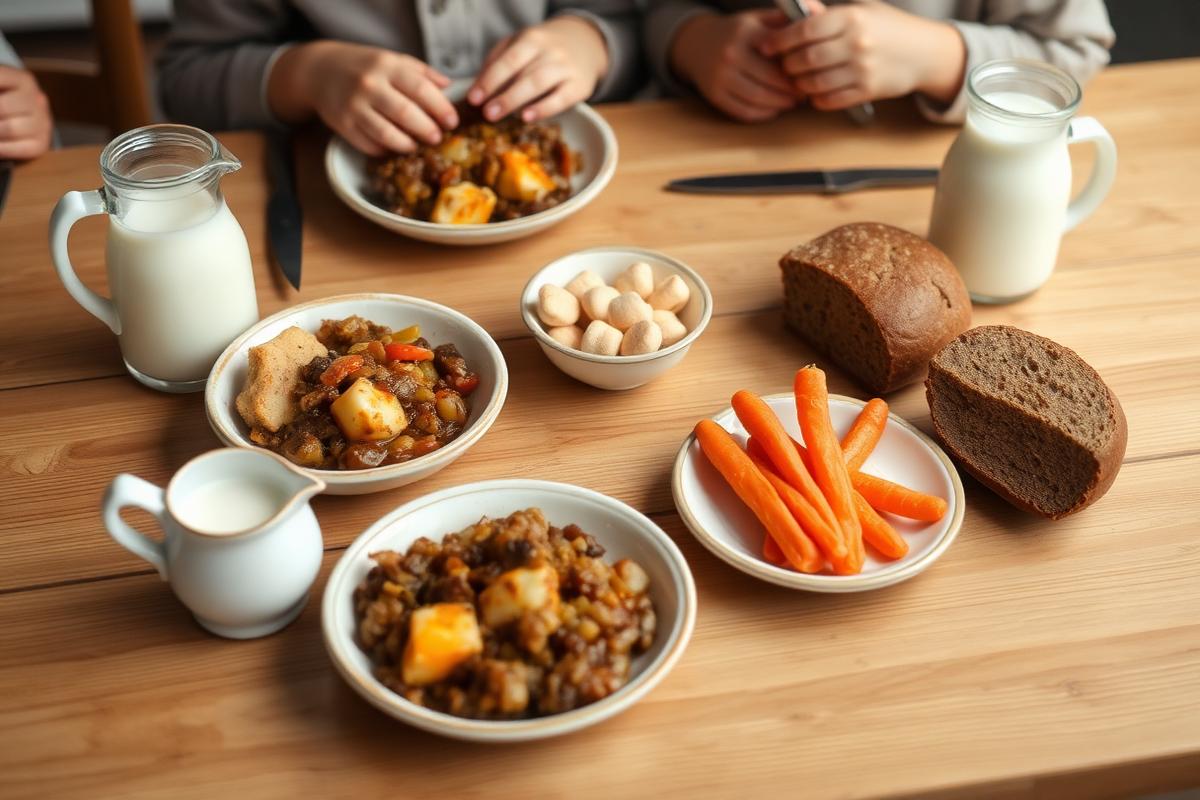
A sample week's menu
| Day | Breakfast | Hot lunch | Afternoon snack |
|---|---|---|---|
| Monday | Porridge with banana | Chicken and vegetable casserole with mash | Homemade brown scone, fruit |
| Tuesday | Weetabix and milk | Baked cod, parsley potatoes, peas | Yogurt and berries |
| Wednesday | Toast with butter, fruit | Shepherd's pie with carrots and broccoli | Banana bread, milk |
| Thursday | Porridge with apple | Vegetable and lentil curry with rice | Cheese, crackers and cucumber |
| Friday | Boiled egg and toast soldiers | Homemade pizza with salad and sweetcorn | Fruit salad and yogurt |
Outdoor play
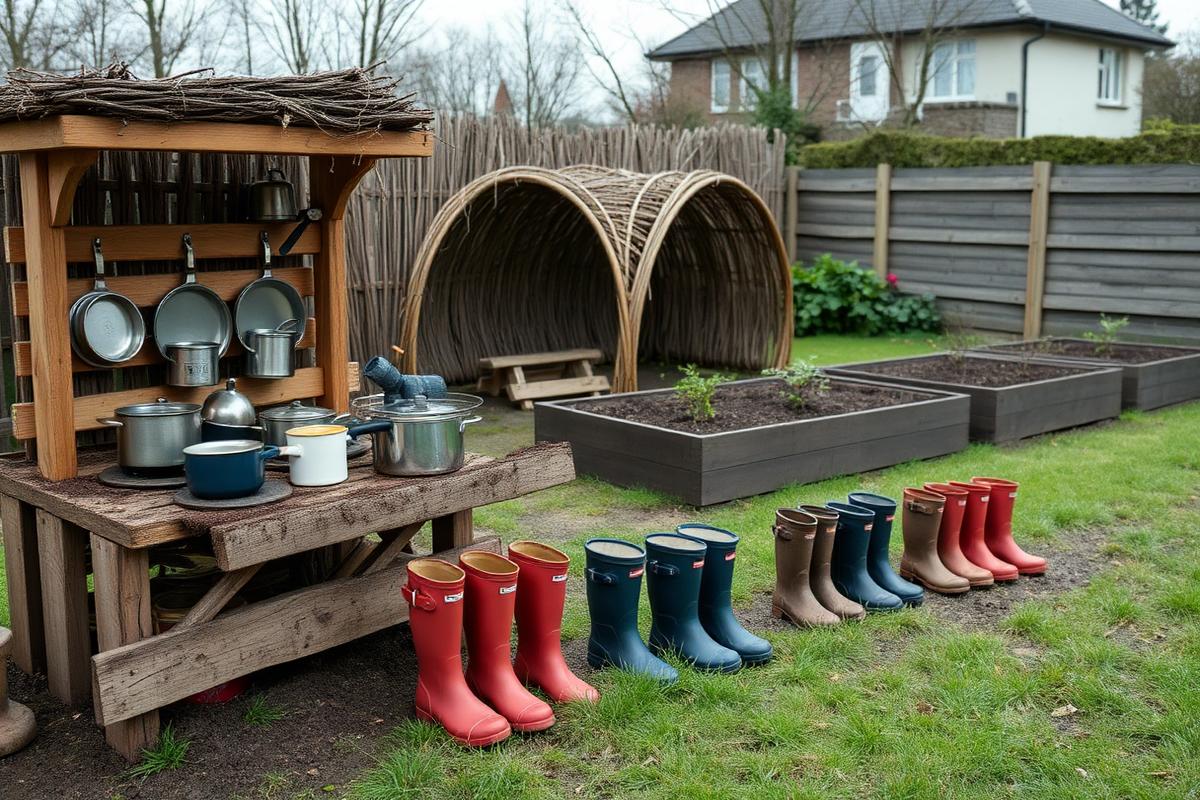
Every child goes outdoors every day, in every weather short of a red warning. We have half an acre: a mud kitchen, a willow tunnel, a bike track, raised beds the children plant and dig, a covered area for wet days and a quiet corner with logs and a canopy.
Please send rain gear and wellingtons that stay here, and dress children in clothes you don't mind getting ruined. We would rather send home a filthy, tired child than a clean one who spent the day inside.
Sleep and rest
Babies sleep to their own pattern in cots in a separate, ventilated sleep area, always placed on their back with feet to the foot of the cot, no pillows, bumpers or loose bedding, in a sleep bag or lightly covered. An adult is in the room and every sleeping child is checked and the check recorded at ten-minute intervals. Older children who still sleep rest on mats after lunch; those who don't sleep have quiet play, stories and yoga rather than being made to lie down.
Settling in
Every new child gets two free settling visits before they start. The first is about an hour with you staying in the room; the second is a little longer and you slip away for a while. Your child is assigned a key worker who does the handovers, keeps the learning journal and is your point of contact. We ring you on the first full day — usually mid-morning, and usually with good news about porridge.
Aistear and Síolta
Aistear is the national early childhood curriculum framework and Síolta is the national quality framework. Services in the ECCE programme must deliver a programme adhering to their principles. In plain terms: Aistear describes what children should be learning and experiencing, Síolta describes how good a setting has to be to deliver it, and both are about relationships and play rather than worksheets.
Well-being
Feeling safe, warm, rested and well fed, and growing strong and confident in your own body. In practice: a key worker who knows your child, a predictable rhythm to the day, real food, sleep when it's needed and hours outdoors.
Identity and Belonging
Knowing who you are, where you come from and that you matter here. In practice: family photographs on the wall, home languages spoken and welcomed, your child's own peg, place and learning journal.
Communicating
Sharing what you think and feel, in any way you can — babble, gesture, drawing, home language, English, cúpla focal. In practice: adults who wait for the answer, daily stories and rhymes, and conversations rather than instructions.
Exploring and Thinking
Making sense of the world by handling it. In practice: open-ended natural materials, Montessori work, mud, water, building, taking apart, and adults who ask what might happen next rather than giving the answer.
AIM — the Access and Inclusion Model
The Access and Inclusion Model supports children with a disability to take part in the ECCE programme. No formal diagnosis is required and each child is considered case by case. Support can range from advice and training for our team, to specialised equipment or appliances, to additional capitation so the room can be staffed differently.
If your child has additional needs, or you simply have a worry you cannot yet name, come and talk to Aoife before you fill in any form. We would far rather plan properly with you than have you wondering whether to mention it.